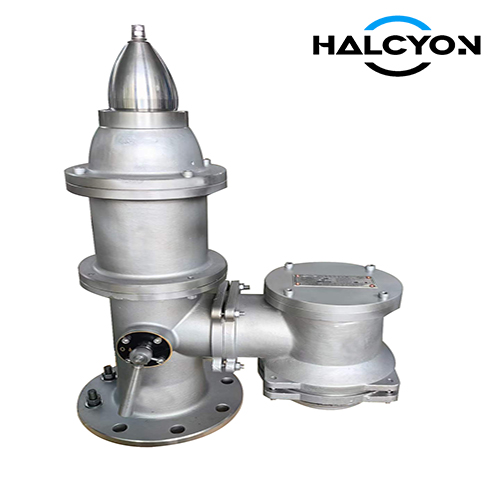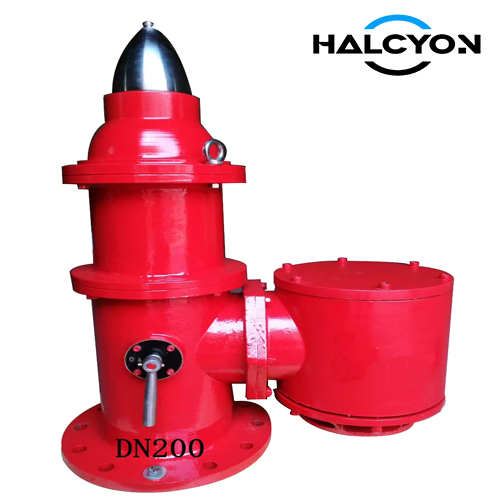
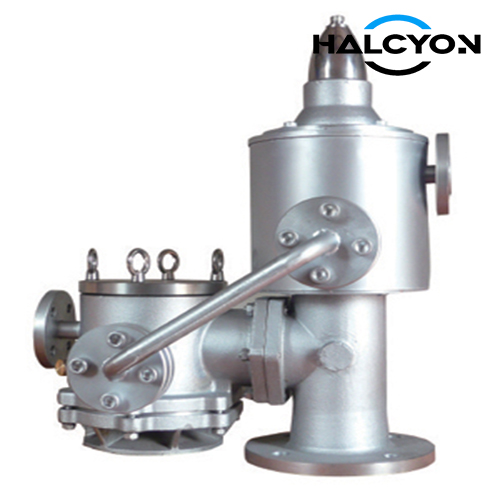
High Velocity Relief Valve with Heating Device
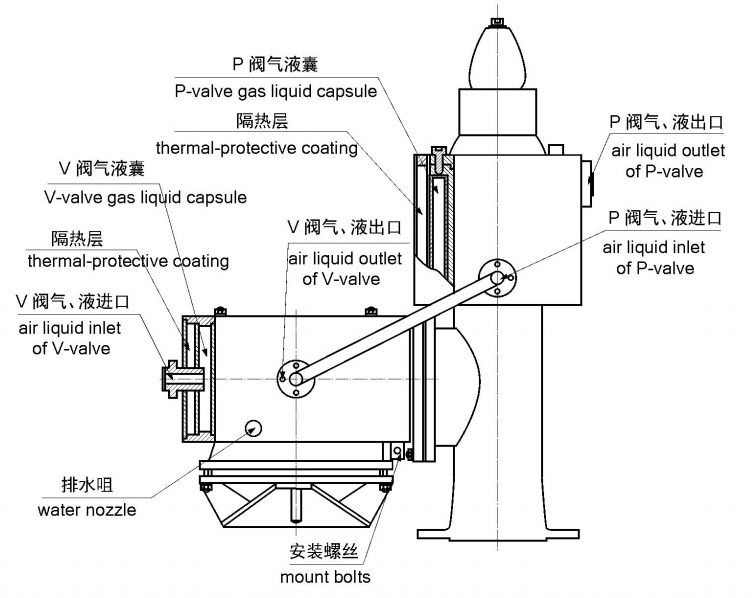
High velocity relief valve with heating device is also called pressure/vacuum valve (P/V valve). It is widely used in the venting system of oil tankers and chemical tankers carrying cargoes which may crystallise as their vapour condenses. According to ISO 15364, a heating device shall be installed when loading such cargoes. A heating capsule is built into both the pressure valve body and the vacuum valve body, and hot steam or hot liquid below 1.2 MPa circulates through them, heating the bodies directly and quickly so that condensed product does not set inside the valve. The capsules are insulated and fitted with a drain nozzle, and need no maintenance while no leakage occurs. It keeps all the certified performance of the standard valve — more than 30 m/s discharge, DN50 to DN250 — at a practical cost.
Overview
| General data | |
|---|---|
| Parameter | Value |
| Model | DF-ISO |
| Nominal size | DN50, DN65, DN80, DN100, DN125, DN150, DN200, DN250 |
| Body material | ZG200-400 cast steel; cast 304 / 304L / 316L optional |
| Internal parts | 0Cr18Ni9 (AISI 304) |
| Flame screen | 00Cr17Ni14Mo2 (AISI 316L), 30 mesh, 2 pcs |
| Set opening pressure — oil tanker | −3.5 to +14.0 kPa |
| Set opening pressure — chemical tanker | −3.5 to +20.0 kPa |
| Rated working pressure | +21.0 / −7.0 kPa |
| Leakage at 80% of set pressure | Essentially zero |
| Outlet velocity | >30 m/s |
| MESG | ≥0.65 mm |
| Flow rate — pressure side | >300 m³/h (DN50) to >3500 m³/h (DN250) |
| Flow rate — vacuum side | >300 m³/h (DN50) to >3000 m³/h (DN250) |
| Operating temperature | −20 °C to +60 °C |
| Flange | GB2501-89; PN0.6 MPa (DN50–DN150), PN1.6 MPa (DN200/250).GB/JIS/DIN/ANSI etc |
| Standards | ISO 15364; IMO MSC/Circ.677; IMO MSC/Circ.1324 |
| Type approval | CCS |
| Heating device | |
|---|---|
| Parameter | Value |
| Heating capsules | 2 pcs — one on pressure valve body, one on vacuum valve body |
| Capsule material | Stainless steel |
| Heating medium | Hot steam or hot liquid |
| Medium pressure | ≤1.2 MPa |
| Insulation | Thermal insulation coating |
| Drain | Drain nozzle on vacuum valve capsule |
| Circuit as supplied | V valve outlet → P valve inlet |
| Independent heating | Inlet V valve / outlet P valve |
| Series connection (multi-valve) | P valve outlet → next valve V valve inlet |
| Prohibited media | Nitric acid, hydrofluoric acid |
| Maintenance | None while no leakage; leak → return to factory |
Opening pressure covers both pressure and vacuum side: −3.5 to +14.0 kPa on oil tankers, −3.5 to +20.0 kPa on chemical tankers. Vacuum valve adjustable within −3.5 to −7.0 kPa.
Setting confirmed on order, calibrated before dispatch, no adjustment on board.
Material: internal parts equal to or one grade above body; chemical tanker material equivalent to hull material.
Structure of Heating Device
Application and precautions
According to ISO 15364, a heating device shall be installed when a ship loads cargoes that crystallise as their vapour condenses. The requirement follows the cargo, not the ship type: it applies wherever such parcels are carried, so a tanker that lifts them on any part of her trade needs the heated version rather than the standard one.
Connect the circuit the right way round: V valve outlet to P valve inlet. Keep the heating medium below 1.2 MPa. The device does not prevent ice — use the lifting handle for that. Nitric acid and hydrofluoric acid must never enter the circuit. If a capsule leaks, take the valve out of service and return it to factory.
FAQ
How often does it need servicing?
Inspection every six months and a strip-down once a year, per IMO A.746(18). Both are done from the top of the valve without removing it from the vent line. The only part that normally wears is a standard FKM O-ring.
What approval do you hold?
CCS type approval, with type testing to ISO 15364, IMO MSC/Circ.677 and MSC/Circ.1324 covering fire resistance, re-burning, freezing, corrosion and flow. For other IACS societies, tell us the society and the certificate you must hold and we will confirm in writing.
Tell us the size, the cargo and the docking date. You will get the setting, the flange match and a real lead time — not a brochure.