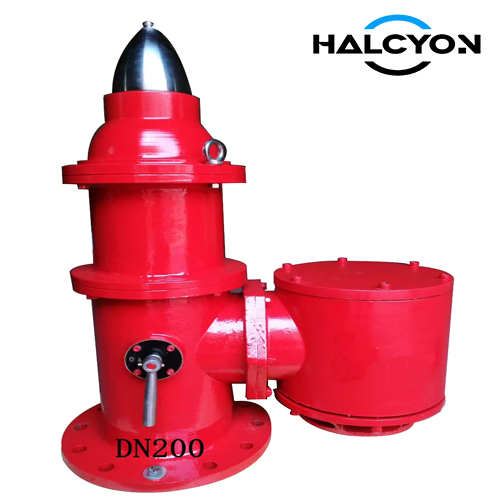
Carbon Steel PV Valve
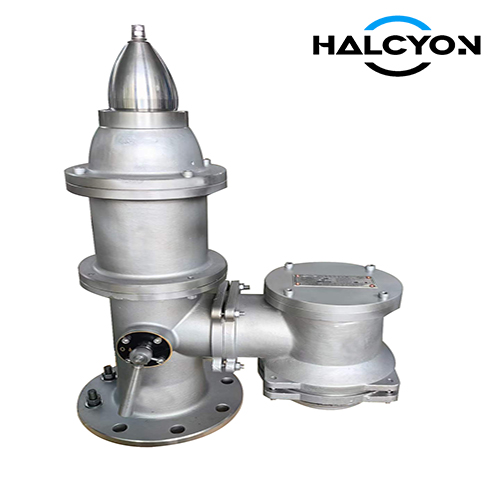
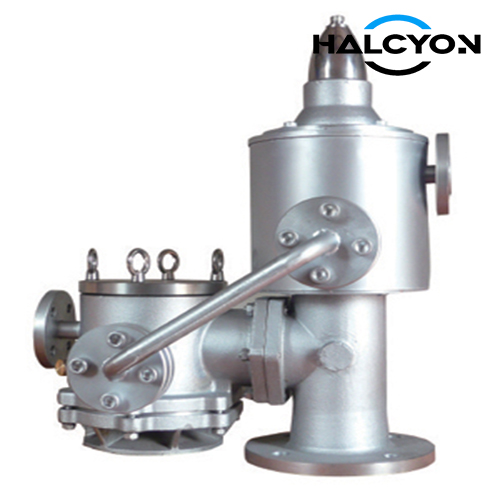
The DF-ISO pressure valve with a cast steel (ZG200-400) body and marine protective coating is the cost-effective standard configuration for oil tanker cargo tank venting. It delivers the same certified high-velocity performance as the stainless version: pressure vapours are ejected vertically at more than 30 m/s during loading, air is admitted automatically during discharging, and flame entry into the cargo tank is prevented. Designed and type-tested to ISO 15364, IMO MSC/Circ.677 and MSC/Circ.1324.For crude oil, fuel oil and clean petroleum products. A coated cast steel body with stainless working parts — the same type test, the same set pressures and the same certification as the stainless version.
Overview
Standard configuration of the DF-ISO series as listed in the manufacturer's parts list: cast steel bodies (P-valve base, P-valve body A/B, V-valve body, flame screen spacer ring and gland) with stainless steel working parts — 0Cr18Ni9 (304) P/V valve seats, P-valve disc (flow guide), counterweight, stem, lifting shaft, cam, positioning plate, handle, bushings, nameplate and lifting lever, plus 316L (00Cr17Ni14Mo2) 30-mesh flame screens. The vibration-free, anti-collision design gives essentially zero leakage at 80% of set working pressure and stable operation over the full loading-rate range. An optional magnetic control mechanism suppresses voyage flutter and vapour loss. An optional gas freeing cover (working pressure ≤2.0 kPa, outlet velocity ≤20 m/s, tested to MSC/Circ.677 as an end-of-line flame arrester) covers tank cleaning and gas-freeing; it must remain closed during navigation and cargo handling. A DF-ISO-60 version is also available for special cargoes.
Parameter | Value |
| Body material | Carbon Steel |
| Set opening pressure | 14.0–20.0 kPa; vacuum -3.5 ~ -7.0 kPa |
| Rated working pressure | +21.0 kPa / -7.0 kPa |
| Flow rate | >300 – >3500 m³/h (see Model Table in section 1) |
| Outlet velocity / MESG | >30 m/s; ≥0.65 m |
Working temperature | -20 °C ~ +60 °C |
Flange | GB2501-89 (DN50–150 PN0.6 MPa; DN200/250 PN1.6 MPa); equiv. ISO 2084 / ISO 2441 |
Standards & approval | ISO 15364; IMO MSC/Circ.677; MSC/Circ.1324; CCS and other classification societies |
| Options | Magnetic control mechanism; gas freeing cover; DF-ISO-60 high-set version |
DF-ISO-60 data | Set opening pressure ≤60.0 kPa, rated 60.0 kPa, flow >600/>600 m³/h, P-valve outlet 50 mm, connection DN80 / DN100 / DN125 |
DF-ISO Cast Steel High Velocity Pressure/Vacuum Valve
| General data | |
|---|---|
| Parameter | Value |
| Model | DF-ISO |
| Type | High velocity pressure/vacuum valve for cargo tanks |
| Nominal size | DN50, DN65, DN80, DN100, DN125, DN150, DN200, DN250 |
| Body material | ZG200-400 cast steel, marine protective coating |
| Wetted and moving parts | 0Cr18Ni9 (AISI 304) — disc, seat, stem, cam, bushings |
| Flame screen | 00Cr17Ni14Mo2 (AISI 316L), 30 mesh, 2 pcs |
| Set opening pressure | −3.5 to +14.0 kPa — oil tanker service |
| Rated working pressure | +21.0 / −7.0 kPa |
| Leakage at 80% of set pressure | Essentially zero |
| Outlet velocity | >30 m/s |
| MESG | ≥0.65 mm |
| Operating temperature | −20 °C to +60 °C |
| Flange | GB2501-89; PN0.6 MPa (DN50–DN150), PN1.6 MPa (DN200/250) |
| Standards | ISO 15364; IMO MSC/Circ.677; IMO MSC/Circ.1324 |
| Type approval | CCS |
| Options | Magnetic control mechanism; gas freeing cover; heating device |
| Flow rate by size | ||
|---|---|---|
| Size | Flow rate — pressure valve | Flow rate — vacuum valve |
| DF50 | >300 m³/h | >300 m³/h |
| DF65 | >400 m³/h | >400 m³/h |
| DF80 | >600 m³/h | >500 m³/h |
| DF100 | >800 m³/h | >600 m³/h |
| DF125 | >1000 m³/h | >800 m³/h |
| DF150 | >2500 m³/h | >2000 m³/h |
| DF200 | >3000 m³/h | >3000 m³/h |
| DF250 | >3500 m³/h | >3000 m³/h |
Flow figures are standard air at 21 °C (70 °F), 1013.25 hPa, density 1.29 kg/m³; maximum pressure drop across the valve shall not exceed the tank design pressure.
Set opening pressure is stated for oil tanker service. Chemical tanker settings (−3.5 to +20.0 kPa) belong to the stainless steel version.
Setting confirmed on order, calibrated before dispatch, no adjustment on board. Internal parts equal to or one grade above body material.
Applications
Crude oil and product tankers. Cargo tank venting on crude carriers and on product tankers carrying fuel oil, gas oil and clean petroleum products — the service the coated ZG200-400 body was specified for.
Tank barges and fuel oil transfer systems. Inland and coastal barges, where the vent line is short, the cargo is fixed and a stainless shell would answer a corrosion question the cargo never asks.
Ballast and fresh water tanks. Where these are vented through the same P/V arrangement, the cast steel body with stainless internals covers the duty without a material upgrade.
Replacement at docking. Fitted where a valve has to come off and go back on inside the docking window — the flange, the overall length and the height are published per size in Table 1 of the dimension sheet, so the fit can be checked before the quotation is issued.
Long loaded passages with an exposed vent line. The optional magnetic control mechanism holds the disc against the flutter a loaded tank produces on passage, reducing vapour loss over a long leg.
Why this valve
A P/V valve is a pressure envelope, and the cargo it carries is vapour, not liquid. That single fact decides the material. For crude oil, fuel oil and clean petroleum products, nothing in ISO 15364 or the class rules asks for a stainless shell — what they ask is that the material suits the cargo. A coated ZG200-400 body with a stainless disc, seat, stem and 316L flame screens meets that requirement, and meets it on the same type test, the same set pressures and the same CCS type approval as the stainless version we also build.
What you get either way is a valve that arrives set, needs no adjustment on board, holds essentially nil leakage up to 80% of its set pressure, and passes the survey on the paperwork as well as on the flange. What changes between the two versions is the body material and the coating — not the test regime, not the approval tier, and not the flow figures in Table 2. We make both, which is why the first question we ask is not how many you need but what is in the tank.