Marine Three-way Plug Valve
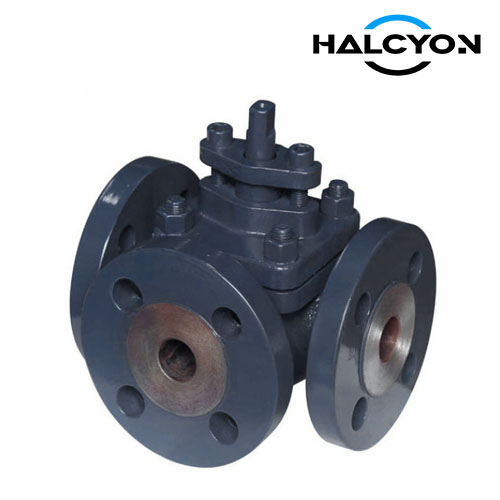
Marine Three-way Plug Valve is a rotary valve designed for marine piping systems where flow direction switching, distribution, and isolation are required.
Unlike standard two-way plug valves, the three-way design contains a specially machined plug with multiple flow passages, allowing the valve to control fluid flow between three connected ports.
By rotating the plug, the valve can:
Direct flow from one pipeline to another
Switch between different systems
Isolate selected pipelines
Control fluid distribution
Marine Three-way Plug Valve is widely used in:
Ship fuel oil systems
Cargo handling systems
Ballast systems
Seawater cooling systems
Marine auxiliary piping systems
Overview
Working Principle of Marine Three-way Plug Valve
Marine Three-way Plug Valve operates by rotating a specially designed plug inside the valve body.
The plug contains multiple passages that determine the flow direction.
Operating Process:
| Step | Description |
|---|---|
| 1 | Operator rotates the valve handle |
| 2 | Plug turns inside the valve body |
| 3 | Internal passages align with selected ports |
| 4 | Flow direction changes |
| 5 | Unused passage is isolated |
Flow Control Modes
| Mode | Function |
|---|---|
| L-Port Type | Switches flow between two pipelines |
| T-Port Type | Allows multiple flow connections |
| Diverter Mode | Diverts one flow into different directions |
| Mixing Mode | Combines two flows into one outlet |
Main Components of Marine Three-way Plug Valve
| Component | Function |
|---|---|
| Valve Body | Contains internal flow passages |
| Three-way Plug | Controls flow direction |
| Stem | Transfers operating torque |
| Seat | Provides sealing performance |
| Packing | Prevents stem leakage |
| Cover | Protects internal components |
| Handle / Gear Operator | Controls valve rotation |
| Flange Connection | Connects with marine pipelines |
Applicable Standards of Marine Three-way Plug Valve
| Standard Category | Applicable Standards |
|---|---|
| Marine Valve Standards | JIS F Series Marine Valve Standards |
| Chinese Marine Standards | GB/T Marine Valve Standards |
| Shipbuilding Standards | CB/T Standards |
| Plug Valve Standards | API 599 |
| Flange Standards | JIS B2220 / GB/T / DIN EN 1092 / ANSI B16.5 |
| Pressure Testing Standards | API 598 / ISO 5208 |
| Classification Requirements | CCS, ABS, DNV, LR, ClassNK |
Material Selection of Marine Three-way Plug Valve
| Material | Features | Applications |
|---|---|---|
| Bronze | Excellent seawater corrosion resistance | Seawater systems |
| Cast Iron | Economical and durable | General marine piping |
| Cast Steel | High strength | High-pressure systems |
| Stainless Steel | Excellent corrosion resistance | Chemical and offshore systems |
| Aluminum Bronze | Superior seawater resistance | Marine applications |
Common Material Standards
| Material | Standard |
|---|---|
| Bronze | ASTM B62 / JIS H5120 BC6 |
| Cast Iron | ASTM A126 |
| Cast Steel | ASTM A216 WCB |
| Stainless Steel | ASTM A351 CF8M |
| Aluminum Bronze | ASTM B148 |
Technical Specifications of Marine Three-way Plug Valve
| Item | Specification |
|---|---|
| Product Name | Marine Three-way Plug Valve |
| Valve Type | Three-port Rotary Plug Valve |
| Operation | Manual / Gear Operated |
| Flow Direction | L-Port / T-Port |
| Medium | Seawater, Water, Oil, Air |
| Connection Type | Flanged |
| Size Range | DN25-DN300 |
| Pressure Rating | PN6-PN40 |
| Material Options | Bronze / Cast Iron / Cast Steel / Stainless Steel |
| Application | Marine Piping Systems |
Typical Applications
| System | Function |
|---|---|
| Fuel Oil System | Switches fuel supply lines |
| Cargo System | Controls cargo flow direction |
| Ballast System | Controls ballast water routing |
| Cooling Water System | Switches cooling circuits |
| Pump Systems | Changes suction/discharge direction |
| Auxiliary Systems | Controls multiple pipelines |
Advantages of Marine Three-way Plug Valve
| Feature | Benefit |
|---|---|
| Multi-port Design | Controls multiple flow paths |
| Compact Structure | Saves installation space |
| Quick Rotation | Fast switching operation |
| Reliable Isolation | Improves system safety |
| Flexible Application | Suitable for various marine systems |
Inspection & Testing
| Test Item | Description |
|---|---|
| Shell Hydrostatic Test | Checks valve body strength |
| Seat Leakage Test | Verifies sealing performance |
| Flow Direction Test | Confirms switching function |
| Operation Test | Ensures smooth rotation |
| Material Inspection | Confirms material grade |
| Dimensional Inspection | Ensures installation accuracy |