Marine Sight Glass
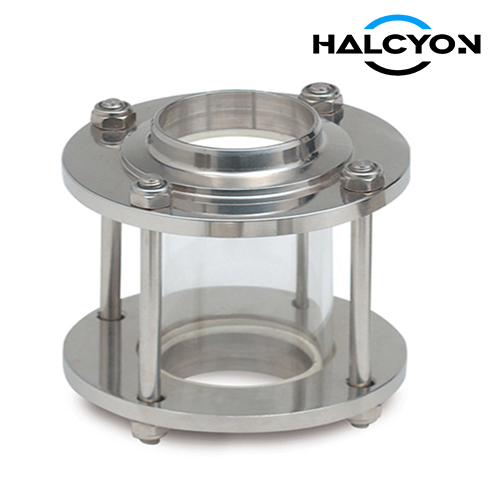
A Marine Sight Glass is a transparent flow‑observation device installed directly into a shipboard piping system. Unlike a valve, it does not shut off or regulate flow; instead, it allows crew members to visually inspect the condition of the fluid — checking for flow continuity, colour, turbidity, contamination, or the presence of air and sediment. A typical marine sight glass consists of a robust metal body (cast or fabricated) that houses one or two circular or slot‑shaped toughened glass discs, held in place by bolted covers and sealed with high‑temperature gaskets. When the pipe is in service, the liquid or gas passes through the body and is visible through the glass window, giving immediate, unmistakable visual confirmation of what is happening inside the line.
Overview
1. Application
Marine Sight Glasses are used across virtually every shipboard fluid system where flow verification and fluid condition monitoring are essential:
Fuel Oil Systems: Between the purifier outlet and the engine inlet, and on the fuel recirculation line, to confirm clean, bubble‑free fuel supply and to detect any water or sludge carry‑over.
Lubricating Oil Systems: On main engine, auxiliary engine, and stern tube lube oil circuits to verify oil flow and clarity, and to spot any emulsification or metal particles.
Seawater and Freshwater Cooling Systems: On the discharge of cooling water pumps and heat exchangers to give immediate visual confirmation of flow — often a class‑required check point for essential cooling water.
Condensate and Boiler Feedwater Lines: To monitor for condensate clarity, detect oil contamination, and confirm proper return flow.
Bilge and Ballast Lines: To observe that pumps are priming, that bilge water is being pumped overboard through the oily water separator, and that no blockages exist.
Cargo and Tank Cleaning Lines: On chemical and product tankers, sight glasses are used at deck manifolds and pump discharges to confirm flow direction and liquid colour during grade changes.
Steam Systems (Condensate and Tracing): With high‑temperature glass and gaskets, sight glasses provide a direct view of condensate flow and steam trap operation.
2. Material Specifications
All materials are selected in strict accordance with the applicable international standard (ISO 12510, JIS F7212, or equivalent) and the service fluid:
Body & Covers:
Grey Cast Iron (e.g., EN‑GJL‑250, FC200): Economy choice for freshwater, ballast, and non‑critical lines; always protected internally and externally by a high‑build epoxy coating or hot‑dip galvanizing.
Ductile Iron (e.g., EN‑GJS‑400‑15, FCD400): Stronger and tougher than grey iron, used for higher pressure ratings and larger sizes.
Cast Steel (e.g., ASTM A216 WCB, SCPH2, ZG230‑450): Standard for high‑pressure steam, high‑temperature oil, and fire‑safe services. Protected by marine‑grade epoxy.
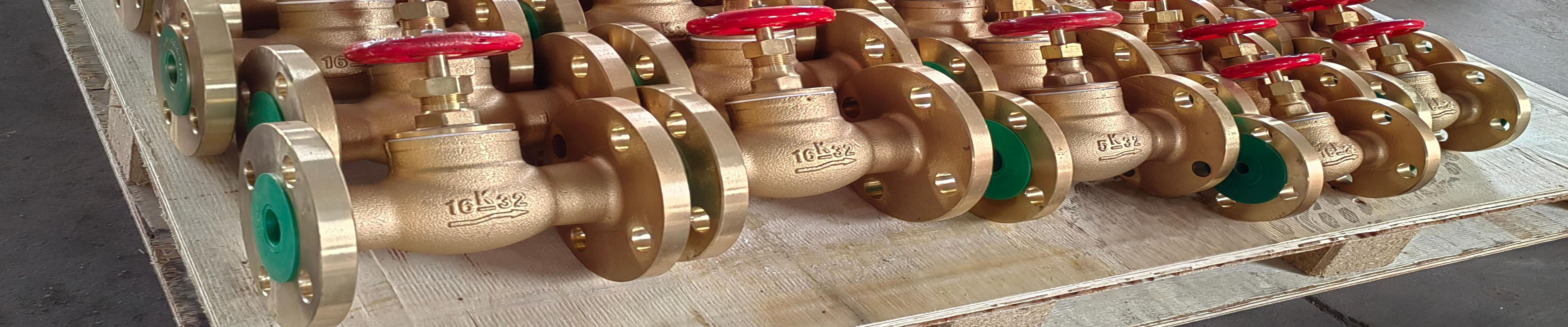
Bronze/Gunmetal (e.g., CuSn10, BC6): The traditional material for seawater, fuel oil, and fire main sight glasses. Inherently corrosion‑resistant and non‑sparking.
Stainless Steel (AISI 316L / 1.4404 / CF8M): The premium choice for aggressive fluids, hygienic water systems, chemical tankers, and offshore platforms. Maintenance‑free external surface.
Glass Discs:
Borosilicate glass (e.g., in accordance with ISO 3585) is standard for all marine sight glasses. It offers high mechanical strength, excellent resistance to thermal shock, and a safe operating temperature up to 280 °C. For moderate‑temperature services, toughened soda‑lime glass may be used. All glass is edge‑ground and thermally treated to meet the glass‑strength requirements of the sight glass standard.
Sealing Gaskets:
EPDM for seawater and freshwater (up to ~120 °C).
NBR for fuel oil, lubricating oil, and bilge water.
PTFE for aggressive chemicals and high‑temperature oil.
Graphite or mica‑reinforced gaskets for steam services.
Fasteners: All cover bolts and nuts are stainless steel (AISI 316 or equivalent) to prevent corrosion and allow easy removal for glass cleaning.
3. Technical Specifications
Our Marine Sight Glasses are designed, manufactured, and tested to deliver proven performance under shipboard conditions:
Design Standard: ISO 12510 (Types A, B, C etc.), JIS F7212, CB/T 4224, or special design to meet equivalent class requirements. Where no dedicated marine sight glass standard exists for a specific configuration, the design follows the pressure‑temperature rating methodology of ASME B16.34 or EN 12516‑1.
Pressure Rating: Standard ratings are PN6, PN10, PN16 (ISO 7005‑1), 5K, 10K, 16K (JIS), and Class 150, Class 300 (ASME B16.5). Higher ratings are available with custom‑engineered bodies and glass thickness.
Temperature Range: -10 °C to +280 °C with borosilicate glass and appropriate gaskets. For continuous high‑temperature service, metal‑reinforced gaskets and stainless steel bodies are selected.
Glass Type: Available with a single‑disc or double‑disc safety design. The double‑disc configuration ensures that if the outer disc is accidentally damaged, the inner disc still maintains the full pressure‑boundary integrity. Optionally, a slotted cylindrical glass can be supplied for 360° visibility in low‑pressure drain and vent lines.
Wiper and Illuminator Options: For services where the glass may become fouled (heavy fuel oil, sludge), a manually operated or magnetically coupled internal wiper can be fitted to clean the glass in service without draining the line. A detachable LED or low‑voltage illuminator is available to enhance visibility in dark engine‑room bilges and tanks.
Certification and Testing: Every sight glass body is hydrostatically shell‑tested at 1.5 times the rated pressure. The glass seating area is leak‑tested at the rated pressure. Glass discs are individually proof‑tested to a safety factor consistent with the design code. Material certificates (EN 10204 Type 3.1) are supplied for body, glass, gaskets, and bolting. The sight glass can be supplied with type approval or conformity certificates from all major IACS classification societies, including ABS, DNV, LR, BV, CCS, NK, KR, and RINA.
4. Dimension Specifications
Our sight glasses are manufactured with exacting dimensional control to ensure direct replacement and perfect flange alignment:
Nominal Size Range: DN 15 to DN 200 (NPS ½" to 8"). Larger sizes are available on request.
Flange Connection Standards: Flanges are drilled and faced to:
DIN EN 1092‑1 (PN6, PN10, PN16, PN25)
ASME B16.5 (Class 150, Class 300)
JIS B2220 (5K, 10K, 16K)
GB/T 2501 (PN6, PN10, PN16)
The flanges are flat‑face or raised‑face to match the vessel’s piping specification, ensuring a gasket‑perfect, full‑contact seal with the mating pipe flanges.Face‑to‑Face Dimension: The body length (distance between flange faces) conforms precisely to the dimensions specified in ISO 12510, JIS F7212, or the applicable national standard. This guarantees that a sight glass of the same nominal size and pressure rating can be installed in an existing spool piece without pipework modification.
Glass Viewing Diameter: The visible glass diameter is optimised for the pipe size to give the largest possible viewing area while retaining full‑rated pressure capability.
Tolerances: All machined dimensions — flange bolt circles, bolt hole diameters, gasket seating faces, and glass retaining bores — are held to the tolerances required by the relevant flange and sight glass standards to prevent bolt‑hole mismatch and glass stress concentrations.