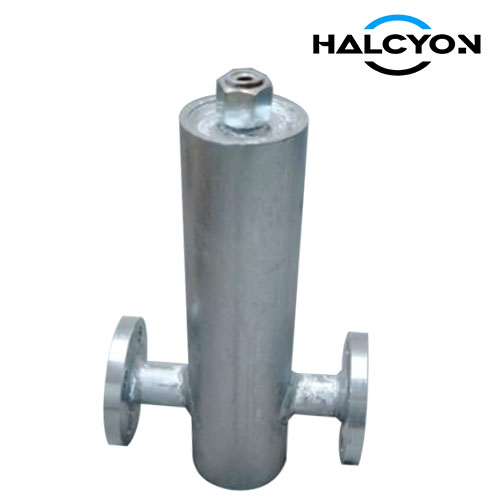
Marine Separator
Marine Separator is a specialized separation device designed to remove water, oil, air impurities, and other contaminants from various marine systems.
Installed in ships, offshore platforms, and marine equipment, Marine Separator plays an important role in maintaining fluid cleanliness, improving system efficiency, and protecting critical equipment from contamination.
A reliable Marine Separator helps maintain stable operation by separating unwanted substances from operating fluids before they affect downstream equipment.
Marine Separators are widely used in:
Marine compressed air systems
Fuel oil systems
Lubrication systems
Cooling water systems
Bilge water systems
Hydraulic systems
Ship auxiliary equipment
Overview
Working Principle of Marine Separator
Marine Separator separates contaminants from fluids based on differences in density, particle size, and physical properties.
The separation process mainly uses:
Gravity separation
Centrifugal separation
Coalescing separation
Filtration separation
When contaminated fluid enters the separator, the internal structure reduces flow velocity and changes the flow direction.
Due to the difference in density:
Heavier particles and liquids move downward
Lighter substances remain separated from the main flow
Clean fluid exits through the outlet
The separated contaminants are collected in the lower chamber and discharged through the drain system.
Main Components of Marine Separator
| Component | Function |
|---|---|
| Separator Body | Main pressure-containing structure providing strength and protection |
| Inlet Connection | Allows contaminated fluid to enter |
| Outlet Connection | Transfers separated clean medium |
| Separation Chamber | Provides separation space and improves efficiency |
| Baffle Plate | Controls internal flow direction |
| Filter Element | Removes fine particles when required |
| Coalescing Element | Combines small droplets into larger droplets for easier removal |
| Collection Chamber | Stores separated contaminants |
| Drain Valve | Removes collected liquids |
| Cover Assembly | Provides access for inspection and maintenance |
Technical Specifications of Marine Separator
| Item | Specification |
|---|---|
| Product Type | Marine Separator |
| Application | Marine Separation Systems |
| Separation Method | Gravity / Centrifugal / Filtration / Coalescing Separation |
| Medium | Air |
| Material Options | Carbon Steel / Stainless Steel |
| Connection Type | Flanged / Threaded |
| Operation | Continuous Operation |
| Working Pressure | According to Design Requirements |
| Application Area | Ships / Offshore Platforms / Marine Equipment |
Pressure Test of Marine Separator
| No. | Item | Shop Test | Type Test | Requirement |
| 1 | Physical and chemical property test | ✓ | ✓ | Comply with clause 4.1 |
| 2 | Visual inspection | ✓ | ✓ | Comply with GB 600 |
| 3 | Strength hydrostatic test | ✓ | ✓ | Comply with clause 5.1 |
| 4 | Sealability air tightness test | ✓ | ✓ | Comply with clause 5.2 |
| 5 | Performance test | ✓ | ✓ | Comply with clauses 5.3 and 5.4 |