Marine Quick Closing Valve
A Marine Quick Closing Valve is a safety-critical shutoff device designed to rapidly stop the flow of flammable liquids—primarily fuel oil, lubricating oil, and thermal oil—in the event of a fire or other emergency. Unlike a standard manually operated valve that must be closed at the valve itself, a quick closing valve can be activated remotely from a safe, accessible location outside the space, typically by pneumatic, hydraulic, or mechanical cable operation. It is a mandatory component of shipboard fuel oil systems under the SOLAS Convention, installed at tank outlets to isolate fuel from an engine room fire and prevent escalation.
Overview
1. Applicable Standards and Regulatory Basis
Our Marine Quick Closing Valves are designed, manufactured, and certified in accordance with:
SOLAS (Safety of Life at Sea) Chapter II-2, Regulation 4.2.2: Mandates that fuel oil, lubricating oil, and other flammable oil tanks situated above the double bottom or in machinery spaces must be fitted with quick closing valves operable from outside the space. Valves must close automatically in the event of fire, or be capable of remote manual closure.
IACS UR (Unified Requirements): Harmonized design, testing, and certification requirements adopted by all International Association of Classification Societies members.
Classification Society Rules: Specific type approval requirements from ABS, DNV, LR, BV, CCS, NK, KR, RINA, and others, covering valve design, material, fire resistance, and remote actuation system integrity.
Applicable Testing Standards: Valves are factory-tested for body strength, seat tightness, and remote closure function in accordance with EN 12266-1, API 598, or the specific class society test procedure.
2. Design Configuration and Actuation Methods
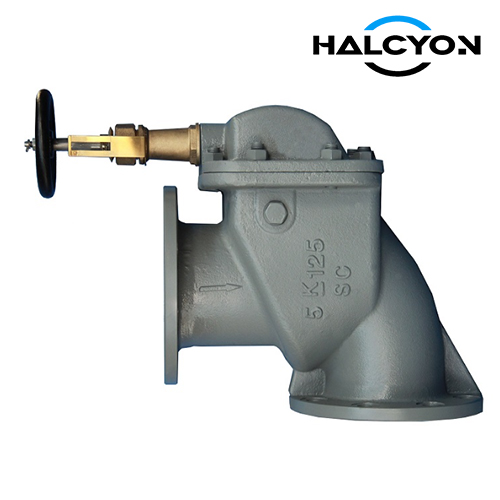
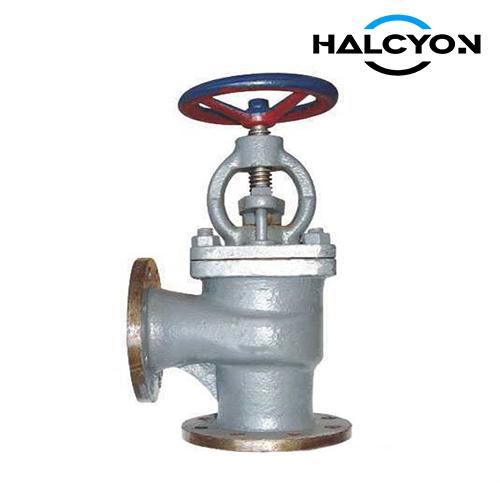
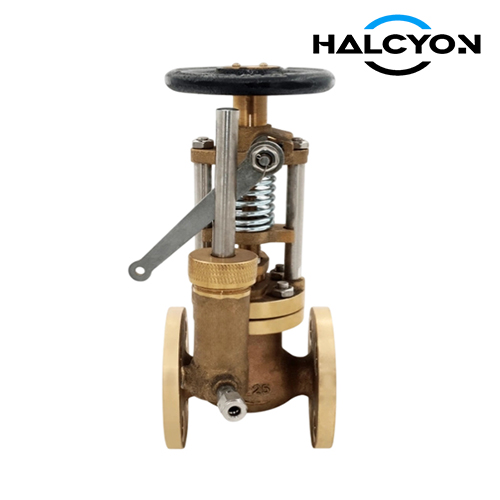
The valve consists of a main body (globe, angle, or straight-through pattern), a disc and seat mechanism, and an actuation system that drives the valve to the closed position in an emergency. We offer several proven actuation methods:
Pneumatic Actuation (Air-to-Close, Spring-to-Open or Fail-Safe): The most common arrangement. A compressed air signal from a remote push-button station depresses a piston against a spring, allowing the valve to open and remain open during normal operation. In an emergency, the air pressure is vented (manually or automatically by a fire detection system), and the powerful spring instantly drives the valve to the fully closed position. This fail-safe operation ensures closure even on total loss of air supply.
Mechanical Cable / Wire-Pull Operation: A mechanical system employing a wire rope and pulleys. The wire is connected to a weighted or spring-loaded lever on the valve. Pulling a handle at the remote station releases the lever, and the spring or weight slams the valve shut. This system is entirely independent of power sources and control systems, offering maximum reliability.
Manual Override: All actuation systems include a means to manually close (and, with appropriate precautions, manually open) the valve locally, usually via a handwheel or lever that disengages from the actuator.
3. Marine-Grade Material Selection
Materials are chosen for high reliability and resistance to the fluids and environment:
Body & Bonnet: Cast steel (e.g., ASTM A216 WCB, GP240GH), ductile iron (EN-GJS-400-18), or stainless steel (CF8M/1.4408) for aggressive fuels and lubes. All bodies are rated for the system design pressure and temperature.
Trim (Disc & Seat): Stainless steel (AISI 316/304) or monel seats and discs, with the option of resilient soft-seat inserts (PTFE, reinforced EPDM, or FKM) for bubble-tight, zero-leakage shutoff on clean oil.
Stem & Springs: Stainless steel stem with corrosion-resistant spring (springs are often epoxy-coated or manufactured from spring-grade stainless steel to withstand the engine room atmosphere).
Fire Resistance: For applications requiring fire resistance (as per SOLAS and class), the valve and actuator are designed and tested to maintain closure capability for a defined period under fire exposure. Graphite stem packing and fire-safe gaskets are used.
4. Key Technical Features and Safety Benefits
Remote Emergency Shutoff: The valve can be closed in seconds from a control station, fire locker, or escape route, eliminating the need to enter a hazardous space.
Fail-Safe Operation (Pneumatic/Hydraulic): Spring-return actuators ensure that the valve closes automatically on loss of control power, air, or hydraulic pressure, providing an inherent safety function.
Positive Mechanical Closure: The spring or weight mechanism provides a powerful, reliable force that slams the valve shut against full system pressure, even if the valve has been open and stationary for extended periods.
Visual and Electrical Position Indication: Limit switch boxes can be fitted to provide open/closed status lights at the remote control panel and in the engine control room. Mechanical position indicators on the actuator are standard.
Rapid Reset: After an emergency activation and the resolution of the incident, the valve can be manually or remotely re-opened once the actuation system is re-pressurized or the cable is re-tensioned, minimizing downtime.
Compact and Robust Design: Designed for the high-vibration, hot, and oil-misted environment of ship machinery spaces, with protection against accidental operation.
5. Typical Marine Applications
Fuel Oil System: Outlets from fuel oil storage tanks, settling tanks, and service tanks.
Lubricating Oil System: Outlets from main engine and auxiliary engine sump tanks, LO storage tanks, and cylinder oil tanks.
Thermal Oil / Hot Oil Systems: Tank outlets and heater isolation in thermal fluid heating systems.
Hydraulic Oil Tanks: Isolation of hydraulic power pack reservoirs.
Other Flammable Liquid Systems: Bunker stations and transfer lines where remote emergency isolation is required by the classification society.