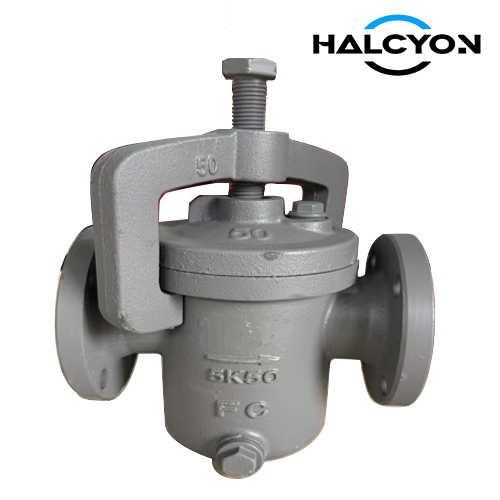
Marine Oil Strainer
Size: DN20-DN300
Type: Simplex oil strainers; Duplex oil strainers
Material: Body: Cast iron, Mesh: SS304/SS316
Media: Fuel, Lubricating Oil, Hydraulic Oil, Other Oils
Standard: CB/T425-94; JIS F7209; CBM1133-82; CB/T692-94; CBM1134-82
Overview
Marine oil strainers are widely used in the fuel and lubricating oil piping systems of various vessels, particularly in applications where high oil cleanliness is required—such as in critical components like marine engines, hydraulic systems, and bearing lubrication systems—to ensure the purity of the oil and the proper operation of mechanical equipment.
Differences Between Simplex and Duplex Oil Filters:
1. Compared to simplex oil filters, duplex oil filters offer stronger initial filtration capacity. Because they have two filter elements, they can remove impurities and debris from the engine oil, keeping it cleaner. Simplex oil filters, on the other hand, have only one filter element, so their filtration capacity is relatively weaker.
2. Replacing the filter element in a simplex oil filter requires shutting down the machine; a dual-stage oil filter uses a switching valve to seamlessly switch to the spare filter element without needing to shut down the machine.
3. Duplex oil filters have more filter elements, resulting in a relatively longer service life. The service life of a duplex oil filter is approximately twice that of a single-stage oil filter. This also means that maintenance costs are lower for dual-stage oil filters when replacing the filter.
Key Selection Points:
The filter’s rated flow rate must meet the system’s maximum flow requirements while allowing for an appropriate margin. A flow rate that is too low will result in excessive pressure drop, affecting system efficiency; a flow rate that is too high may reduce filtration effectiveness.
In practical applications, the installation location of marine filters is also critical. Fuel filters typically employ a two-stage filtration configuration, with the coarse filter installed before the fuel pump inlet to protect the pump, and the fine filter installed after the high-pressure fuel pump outlet to protect the injectors. Lubricating oil filters often combine full-flow filtration with bypass filtration to ensure effective protection under all operating conditions.