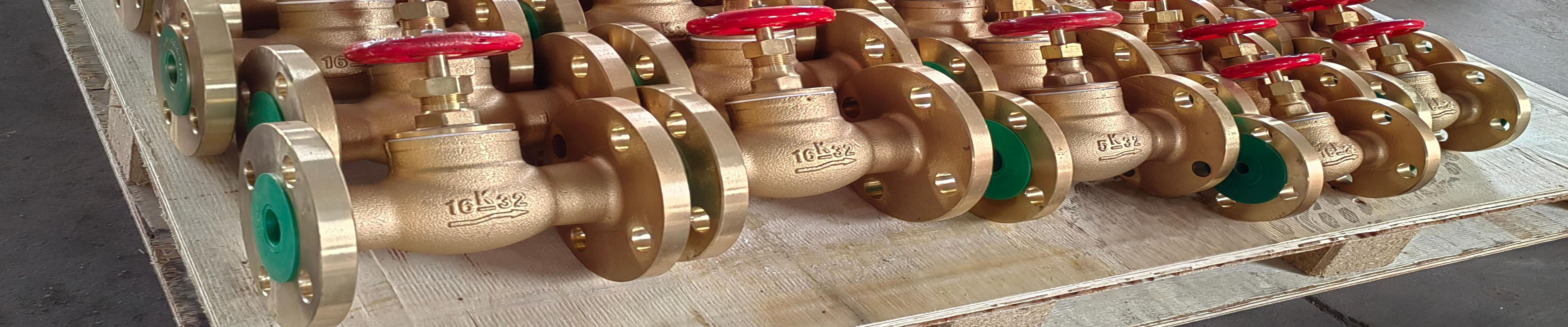
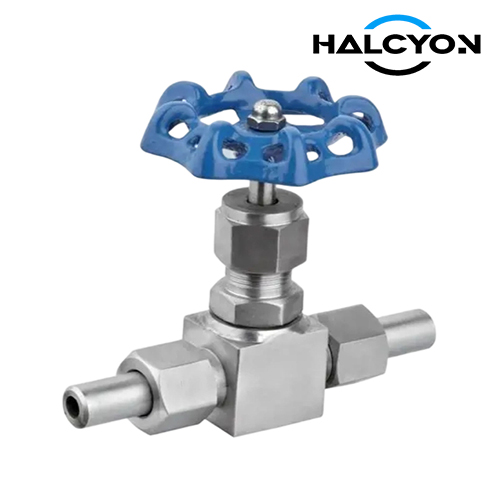
Marine Needle Valve
A Marine Needle Valve is a precision flow control device featuring a slender, tapered needle-like plunger that moves linearly into a matching seat. By rotating a finely threaded stem, the operator can make extremely small adjustments to the flow area, enabling precise regulation of flow rate or pressure in small-bore piping systems. Available in straight, angle, or manifold patterns, the marine needle valve provides both accurate throttling and bubble-tight shutoff. It is designed to withstand the continuous vibration, corrosive salt-laden atmosphere, and demanding fluids found on board vessels, ensuring reliable performance in fuel oil, lubricating oil, hydraulic oil, steam, compressed air, and instrumentation lines.
Overview
1. Applicable Standards and Design Basis
Our Marine Needle Valves are designed, manufactured, and tested to meet the rigorous demands of shipboard service, with reference to the following:
General Design Standards: While a dedicated ISO marine needle valve standard does not yet exist, our valves conform to the design principles and testing requirements of EN 12266-1 (Industrial valves – testing), API 598 (Valve inspection and testing), and relevant material standards.
Connection Standards: Available with threaded ends (BSPP, BSPT, NPT, metric), compression tube fittings (DIN 2353, ISO 8434, JIS B2351), or flanged connections per DIN EN 1092-1 (PN), ASME B16.5 (Class), JIS B2220 (K), and GB/T 2501. Simply specify your required connection type and standard.
SOLAS / Classification Society Rules: For fuel oil and flammable fluid services, valves are designed to comply with the fire safety and isolation requirements of SOLAS Chapter II-2 and the applicable rules of ABS, DNV, LR, BV, CCS, NK, KR, RINA, and other IACS members.
2. Marine-Grade Material Selection
Materials are selected for maximum corrosion resistance, compatibility with shipboard fluids, and non-sparking safety where required:
Body & Bonnet:
Bronze / Gunmetal: Traditional choice for seawater, freshwater, and general oil services. Inherently corrosion-resistant and non-sparking.
Stainless Steel AISI 316L / 1.4404: Premium corrosion resistance for aggressive fluids, high-pressure hydraulics, steam, and hygienic applications. Maintenance-free external surface.
Duplex / Super Duplex Stainless Steel: For high-pressure chloride-rich seawater, chemical injection, and offshore applications.
Carbon Steel with Protective Coating: Economical for clean mineral oil and indoor instrument air services. Coated with epoxy or galvanized.
Needle & Seat:
Precision-machined from hardened stainless steel (AISI 316, 17-4PH) for metal-to-metal flow control and positive shutoff.
Soft-seat inserts of PTFE, PEEK, or reinforced FKM are available for bubble-tight, zero-leakage closure on clean fluids and gases.
Stem & Packing:
Stainless steel stem with a fine-pitch acme or metric thread for smooth, backlash-free adjustment.
PTFE or graphite gland packing, compressed by an adjustable gland nut. Graphite packing is used for fire-safe and high-temperature steam applications. Live-loaded packing options ensure leak-free performance over thousands of cycles.
3. Key Technical Features and Operational Benefits
Precision Flow Control: The long, tapered needle and fine-threaded stem allow the operator to make minute flow adjustments with high repeatability. This is essential for burner regulation, instrument isolation damping, and flow metering.
Bubble-Tight Shutoff: The needle seats firmly into a precision-machined seat, providing positive, leak-free closure when the valve is fully closed. Soft-seat options achieve zero leakage per EN 12266-1 Rate A.
Vibration Resistance: The stem is equipped with a friction lock, locking nut, or a self-locking handle design to prevent the set position from drifting under the constant vibration of an engine room.
Compact and Versatile: Available in straight-through, angle (90°), and multi-port manifold configurations, needle valves fit easily into instrument panels, burner fronts, and tightly packed machinery spaces.
High-Pressure and Temperature Capability: With proper material selection, marine needle valves can handle pressures from vacuum to 1000 bar and temperatures from cryogenic (LNG) to over 400 °C (superheated steam).
Fire-Safe Design (Optional): For fuel oil and flammable fluid services, a fire-safe design with graphite stem packing and a metal-to-metal secondary seat can be supplied, maintaining leak integrity during and after a fire.
4. Typical Marine Applications
Marine Needle Valves are used in practically every shipboard system requiring fine flow or pressure regulation:
Fuel Oil Systems: Flow control to main and auxiliary engine burners, pilot lines, and fuel recirculation loops.
Lubricating Oil and Hydraulic Systems: Pressure regulation, sampling, and isolation of gauges and sensors on main engine, stern tube, and deck machinery circuits.
Steam Systems: Steam tracing isolation and control, gland sealing steam supply, and steam injection flow regulation.
Instrument Air and Control Air: Precision regulation of pneumatic actuator and control panel supply pressure; gauge snubbers and instrument isolation.
Gauge and Transmitter Isolation: Isolating and damping pressure gauges, transmitters, and level indicators to prevent pulsation damage.
Fresh Water and Potable Water: Sampling valves and flow control in treatment and dosing plants.
Chemical Injection and Dosing: Fine control of chemical metering pumps and injection quills on tankers, offshore platforms, and exhaust gas cleaning systems.