Marine Flat Sight Glass
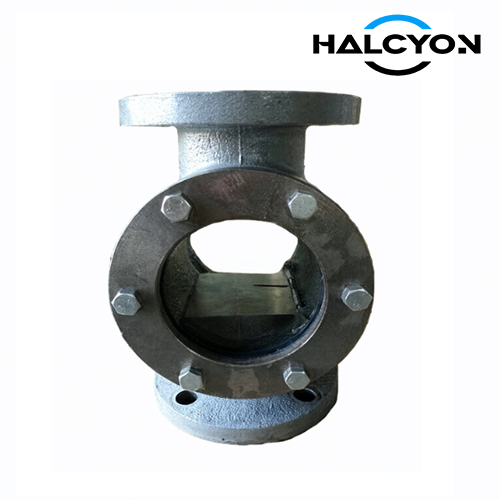
A Marine Flat Sight Glass is a robust, in-line flow observation device designed specifically for shipboard piping systems. It consists of a metal body with one or two flat, circular toughened glass discs clamped between bolted covers. The flat disc design provides a wide, distortion-free viewing area and is inherently stronger than cylindrical glass, making it suitable for higher pressure and temperature applications. It allows crew members to visually verify flow continuity, fluid condition, colour, and the presence of contaminants in fuel oil, lubricating oil, seawater, condensate, and other critical fluids, giving immediate diagnostic information without interrupting the system.
Overview
1. Application
Marine Flat Sight Glasses are installed wherever reliable, high‑integrity visual flow monitoring is required:
Fuel Oil Systems: On the discharge of purifiers and before the engine inlet to confirm a clean, bubble‑free fuel supply and to detect any water or sludge carry‑over.
Lubricating Oil Systems: On main engine, auxiliary engine, and stern tube lube oil returns to verify oil flow, clarity, and detect emulsification or metallic particles.
Seawater and Freshwater Cooling: On pump discharges and heat exchanger outlets to give immediate visual confirmation of cooling water flow, often a classification society requirement.
Condensate and Boiler Feedwater: To monitor condensate clarity, detect oil contamination, and confirm proper return flow.
Cargo and Tank Cleaning Lines: On chemical and product tankers, flat sight glasses at deck manifolds and pump suctions allow observation of product grade changes and flow direction.
Bilge and Ballast Systems: To verify pump priming and that water is being discharged overboard through the oily water separator.
2. Material Specifications
Materials are selected in accordance with ISO 12510 or equivalent standards and the specific service fluid:
Body & Covers:
Ductile Iron (EN‑GJS‑400‑15 / ASTM A536): Strong and tough, used for standard marine applications; protected by high‑build epoxy coating.
Cast Steel (ASTM A216 WCB / 1.0619): For high‑pressure steam, hot oil, and fire‑safe services.
Bronze/Gunmetal (CuSn10 / BC6): Inherently corrosion‑resistant and non‑sparking; ideal for seawater and fuel oil lines.
Stainless Steel (AISI 316L / CF8M): Premium choice for aggressive chemicals, hygienic freshwater, and offshore use; requires no external coating.
Flat Glass Discs:
Borosilicate glass (per ISO 3585) is standard, providing high mechanical strength, excellent thermal shock resistance, and a safe operating temperature up to 280 °C. For specific services, toughened soda‑lime or quartz glass may be used. All discs are edge‑ground and thermally pre‑stressed.
Sealing Gaskets:
EPDM for seawater and freshwater (up to 120 °C).
NBR for fuel oil and lubricating oil.
PTFE for aggressive chemicals and high temperatures.
Graphite or mica‑reinforced for steam and fire‑safe applications.
Fasteners: All cover bolts, nuts, and washers are stainless steel (AISI 316) to prevent corrosion and allow easy glass removal.
3. Technical Specifications
Our Marine Flat Sight Glasses are designed, manufactured, and tested to rigorous international requirements:
Design Standards: ISO 12510 (Type B or C flat glass), JIS F7212, CB/T 4224. Pressure‑temperature ratings follow ASME B16.34 or EN 12516‑1 methodology.
Pressure Ratings: PN6, PN10, PN16, PN25, PN40 (ISO); Class 150, Class 300 (ASME); 5K, 10K, 16K (JIS). Higher ratings on request.
Temperature Range: -10 °C to +280 °C with borosilicate glass and compatible gaskets.
Glass Configuration:
Single Flat Glass: For low‑risk, non‑hazardous services where a compact design is needed.
Double Flat Glass (Safety Design): Two independent flat discs. If the outer disc is accidentally damaged, the inner disc maintains full pressure‑boundary integrity. This is the standard for flammable oil, steam, and other hazardous fluids.
Optional Features: An internal wiper (manual or magnetically coupled) for cleaning the glass in service; an integrated LED illuminator for enhanced visibility in dark engine‑room spaces.
4. Dimension Specifications
Exacting dimensional control ensures direct interchangeability and straightforward installation:
Nominal Size Range: DN 15 to DN 200 (NPS ½" to 8"). Larger sizes available for special applications.
Flange Connection Standards:
DIN EN 1092‑1 (PN6, PN10, PN16, PN25, PN40)
ASME B16.5 (Class 150, Class 300)
JIS B2220 (5K, 10K, 16K)
GB/T 2501 (PN6, PN10, PN16)
Flanges are flat‑face or raised‑face to match the vessel’s piping specification.Face‑to‑Face Dimension: The body length between flange faces is manufactured precisely to the dimensions given in ISO 12510, JIS F7212, or CB/T 4224, ensuring a perfect fit into an existing spool piece without any pipe modification.
Glass Viewing Diameter: The clear viewing area is maximised for each nominal size while retaining the full pressure‑bearing capacity mandated by the standard.
Tolerances: All machined dimensions — bolt circle, bolt hole diameter, gasket seating face, and glass retaining bore — are held to the strict tolerances of the applicable flange and sight glass standards.