Deck Stand
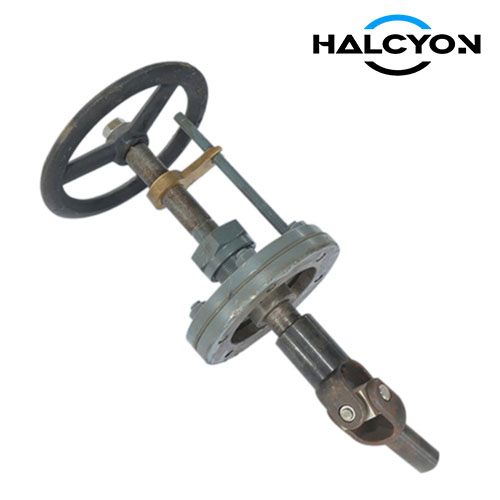
Deck Stand is a marine deck-mounted operating device designed for remote control of valves and piping systems installed on ships.
The deck stand provides a convenient operating position on the ship deck, allowing crew members to manually operate valves located in cargo tanks, ballast systems, fuel systems, and other inaccessible areas through mechanical transmission mechanisms.
Deck Stand is commonly installed on:
Oil tankers
Chemical tankers
Cargo vessels
Offshore platforms
Marine piping systems
The device is typically connected with remote valve operating equipment through shafts, gears, or linkage systems, enabling safe and efficient valve control from the deck area.
Overview
Working Principle of Deck Stand
Deck Stand operates by transmitting manual force from the deck operating position to remotely installed valves.
Operating Process:
Operator rotates the handwheel or operating handle.
The rotating movement is transferred through the shaft or gear mechanism.
The connected valve stem receives operating force.
The remote valve opens or closes.
The position indicator shows the valve status
Standrard of Deck Stand
GB/T 700 Carbon structural steels
GB/T 1176 Technical conditions for cast copper alloys
GB/T 1239 Spring steel wire
GB/T 1720 Test method for adhesion of paint film
CB/T 3244 General technical requirements for marine valves
CB/T 3501 General technical requirements for marine electrical equipment
Performance Test of Deck Stand
Each Marine Deck Operating Device undergoes a series of strict inspections and performance tests to ensure reliable operation and long service life. The operation test is carried out to verify smooth handwheel operation and proper functioning of the operating mechanism. The transmission test checks the accuracy and reliability of mechanical movement transfer between components. The load test is performed to confirm the structural strength and load-bearing capability of the device. A dimensional inspection ensures that all critical dimensions meet design requirements and installation accuracy. The surface inspection verifies coating quality and corrosion protection performance. Finally, a final inspection is conducted to confirm overall product performance, quality, and compliance with applicable marine standards before delivery.