Control Box for Marine Quick Closing Valve
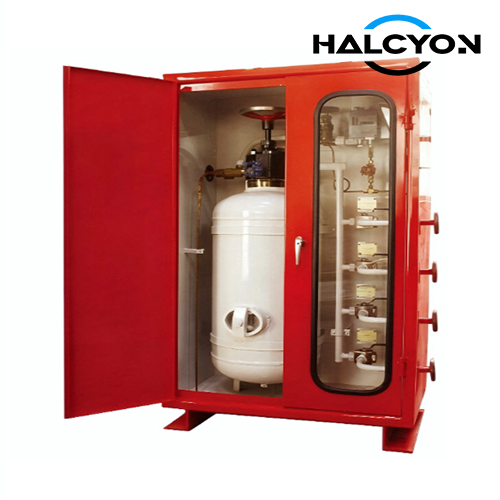
A Control Box for Marine Quick Closing Valves is a pre-assembled, centralized control station that enables the remote emergency shutoff of one or multiple pneumatically or hydraulically actuated quick closing valves. It is typically installed at a safe, easily accessible location outside the machinery space — such as the fire control station, engine control room, or an escape route. The control box contains the valves, pressure switches, and electrical components necessary to rapidly vent actuating air or oil pressure from the quick closing valve actuators. When an operator presses an emergency stop button (or upon an automatic fire detection signal), the control box instantly depressurizes the actuator circuit, causing all connected quick closing valves to fail-safe to the closed position, isolating fuel oil and other flammable liquids.
Overview
1. Applicable Standards and Regulatory Basis
Our Control Boxes for Marine Quick Closing Valves are designed, manufactured, and tested in accordance with:
SOLAS Chapter II-2, Regulation 4.2.2: Mandates that quick closing valves must be operable from a safe position outside the protected space. The control box provides this remote operating capability.
Classification Society Rules: ABS, DNV, LR, BV, CCS, NK, KR, RINA, and other IACS members have specific requirements for control systems of quick closing valves, including enclosure protection, marking, and fail-safe operation.
IEC 60529 (IP Code): Enclosures are rated to a minimum of IP44, typically IP56 or IP65, for protection against dust and water ingress in the marine environment.
Applicable Pneumatic/Hydraulic Standards: Components are selected to meet ISO 5599 (pneumatic), ISO 4414 (pneumatic systems), and relevant pressure equipment directives.
Fire Resistance: Where required by class, the control box and internal cabling/piping are constructed of fire-resistant or fire-protected materials to maintain operability during a fire.
2. Types of Control Boxes and Configuration
We offer control boxes tailored to your vessel’s quick closing valve actuation system:
Pneumatic Control Box: The most common type. It receives compressed air from the ship’s control air supply, regulates and filters it, and distributes it to the pneumatic actuators of quick closing valves via a network of 3/2-way manual push-button valves or solenoid valves. Pressing a mushroom-head emergency button or de-energizing a solenoid vents the downstream air, causing all connected valves to spring-close simultaneously. Pneumatic logic can be configured so that pressing any single button closes all valves, or buttons can be grouped to isolate specific tanks.
Hydraulic Control Box: Designed for hydraulic quick closing valve systems. Contains hand-operated directional valves or solenoid valves that release hydraulic pressure from the valve actuators, triggering spring-driven closure. Includes a small accumulator and pressure gauge for monitoring system readiness.
Electro-Pneumatic / Electro-Hydraulic Control Box: Incorporates solenoid valves, which are triggered by electrical signals from remote push-buttons, fire detection panels, or the vessel’s integrated automation system. This allows closure from multiple remote locations using lightweight electrical cabling rather than long pneumatic lines. Often includes a local manual override push-button.
3. Enclosure and Component Selection
Enclosure Material: Marine-grade stainless steel (AISI 316L) for superior corrosion resistance, or heavy-duty powder-coated carbon steel. Enclosures are fully gasketed with a hinged, lockable door and weatherproof canopy where required.
Internal Components:
Manual Push-Buttons: Large, red mushroom-head type with protective shroud to prevent accidental operation. Clearly labeled with tank names or system identification.
Solenoid Valves: For electrical triggering, rated for continuous duty in the engine room temperature range.
Pressure Regulator, Filter, and Gauge: To condition incoming air and provide visual confirmation of system pressure.
Pressure Switches: Provide remote electrical alarm signals for low air/hydraulic pressure (control system failure) and for valve status feedback.
Test Valves: Built-in isolation and test ports to allow periodic function testing of the quick closing valves without disrupting the entire system.
All piping and fittings within the box are stainless steel or corrosion-resistant brass, fully supported and leak-tested.
4. Key Technical Features and Safety Benefits
Single-Point Emergency Shutoff: A single push-button or electrical signal instantly closes all designated quick closing valves, providing complete fuel isolation with one action.
Fail-Safe Operation: The pneumatic/hydraulic circuit is designed to vent to atmosphere upon any loss of control power, automatically closing all connected valves — no external power is required to achieve the safe state.
Protected and Accessible Location: The control box is installed outside the machinery space, allowing crew to isolate fuel without entering a hazardous area.
Clear Visual Indication: Pressure gauges show system readiness; individual labels indicate which valves are controlled by which button; optional electrical feedback to the engine control room provides remote status.
Tamper-Resistant and Weatherproof: Lockable, robust enclosure prevents unauthorized or accidental operation and protects internal components from water, oil mist, and mechanical damage.
Modular and Expandable: Control boxes can be configured to operate any number of quick closing valves. Additional buttons or solenoid valves can be added if future tank modifications require it.
5. System Integration and Typical Configuration
A typical control box integrates seamlessly with the ship’s pneumatic and electrical systems:
Air Supply: Receives filtered, regulated control air (5-8 bar) from the ship’s main control air system. A local pressure gauge confirms supply.
Output Lines: Multiple stainless steel or copper tube outlets connect to individual quick closing valve actuators. Each line is clearly labeled.
Electrical Interface: For electro-pneumatic boxes, a terminal strip receives signals from remote push-buttons and fire detection panels, and outputs valve status and control pressure alarm signals.
Testing Function: A built-in test mode or manual bypass valve allows crew to periodically test the closure function of each quick closing valve without completely shutting down the fuel system.