CB/T 4233 Marine Deck Valve

CB/T 4233 Marine Deck Valve


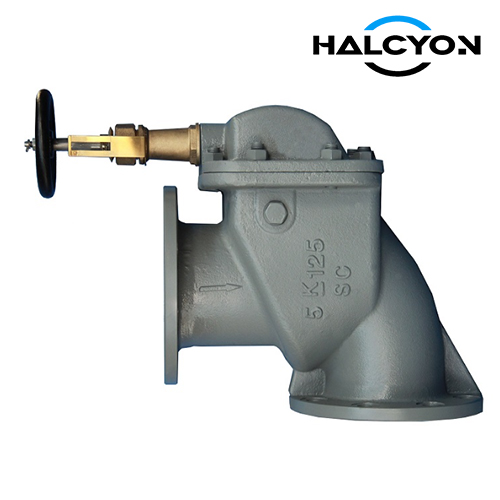
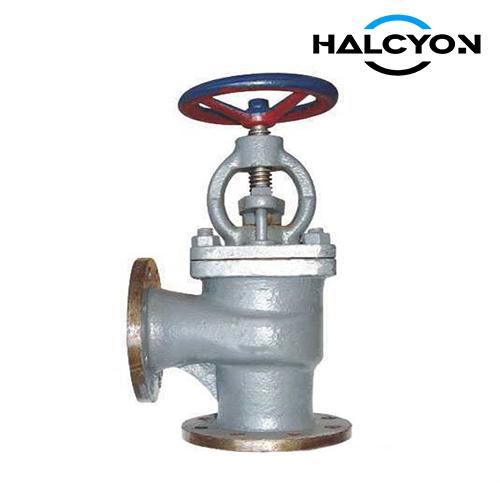
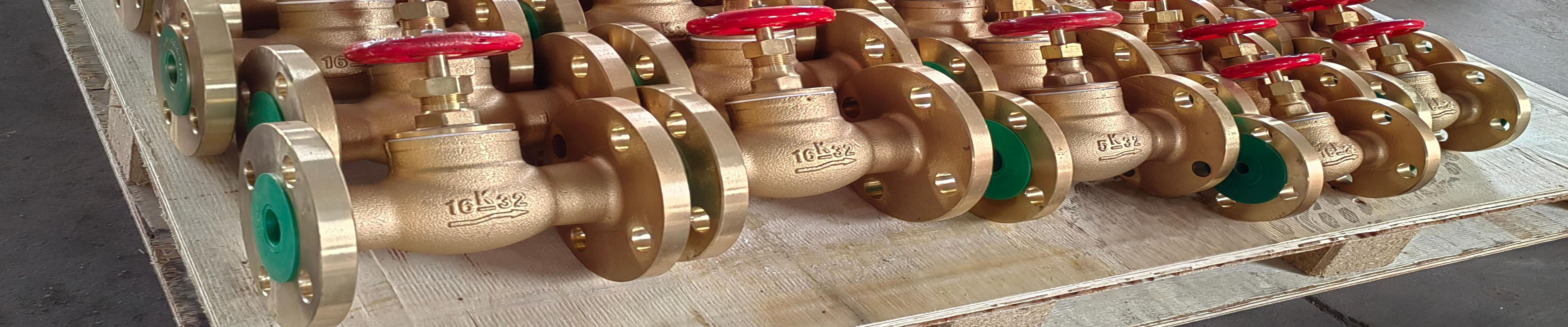
CB/T 4233 is the Chinese shipbuilding industry standard that specifies the design, materials, construction, dimensions, testing, and acceptance criteria for a specific type of marine deck valve. The valve is typically a flanged, straight‑pattern or angle‑pattern globe (stop) valve intended for direct mounting on a deck penetration. Its body, bonnet, and operating mechanism are all located above the deck surface, providing immediate access for manual operation, visual position indication, and maintenance, while the base flange forms a watertight seal with the deck. The rising stem design gives unambiguous open/closed status from a distance. CB/T 4233 valves are used throughout the vessel on cargo, ballast, fuel, fire‑fighting, freshwater, and other piping systems that pass through the weather deck, where above‑deck isolation is required for safety, operational control, or regulatory compliance.

Overview

1. Application
CB/T 4233 Marine Deck Valves are installed on exposed decks wherever a pipe penetrates the deck and the isolation point must be accessible from above:

  • Cargo Oil and Chemical Tanker Manifolds: Individual tank drop‑line isolation and deck‑level shutoff for cargo, stripping, and tank cleaning lines.

  • Ballast and Bilge Systems: Deck‑operated valves for ballast tank penetration, overboard discharge, and bilge line isolation, enabling local manual control during ballasting and de‑ballasting.

  • Fuel Oil Bunker and Transfer Stations: Manual isolation valves mounted on deck at fuel oil filling and transfer connections, often in conjunction with quick‑closing arrangements.

  • Fire Main and Foam Systems: Hydrant isolation and foam concentrate supply valves mounted above deck penetrations, providing immediate fire‑fighting response.

  • Fresh Water and Potable Water Systems: Valves at water loading and tank connection points on deck, ensuring safe, corrosion‑free water supply.

  • Inert Gas, Venting, and Sounding Lines: Small‑bore deck valves for pressure/vacuum breaker lines, tank vent headers, and sounding pipe terminations.

  • Tank Cleaning and Stripping Systems: Supply valves for seawater or heated water to fixed tank cleaning machines, located at deck level.

2. Material Specifications
All materials are selected in strict accordance with the material standards referenced by CB/T 4233 and the corresponding GB (national) standards, ensuring full traceability and proven marine service:

  • Body & Bonnet:

    • Bronze/Gunmetal (e.g., ZCuSn10Zn2 per GB/T 1176): The traditional standard for seawater, fire main, and fuel oil deck valves. Inherently corrosion‑resistant and non‑sparking; requires no external coating.

    • Cast Steel (ZG230‑450 per GB/T 11352): For higher pressure and temperature applications such as steam, hot oil, and high‑pressure ballast. Externally protected by a heavy‑duty, UV‑resistant marine epoxy coating.

    • Ductile Iron (QT400‑18 or QT450‑10 per GB/T 1348): Economical and strong for general water, ballast, and bilge services. Protected by high‑build epoxy coating.

    • Stainless Steel (ZG0Cr18Ni9 or ZG0Cr17Ni12Mo2 per GB/T 2100): Premium choice for aggressive chemicals, hygienic freshwater, and high‑corrosion services. No external coating required.

  • Trim (Disc & Seat Ring): Renewable and precision‑lapped from stainless steel (2Cr13, 304, 316L), bronze, or Monel for positive metal‑to‑metal shutoff. Soft‑seat options (EPDM, NBR, PTFE) are available for bubble‑tight closure on clean fluids.

  • Stem: Stainless steel (2Cr13, 304, 316L) with an external acme thread (rising stem) for clear visual position indication. The stem is polished to ensure smooth operation and extended packing life.

  • Packing & Gaskets: Deep stuffing box filled with graphite or PTFE packing rings, externally sealed by an O‑ring and wiper ring to prevent water, salt, and dust ingress. Bonnet gaskets are graphite, PTFE, or spiral‑wound stainless steel/graphite to suit the service temperature.

  • Handwheel & Fasteners: Heavy‑duty handwheel in cast iron (coated) or bronze/stainless steel, sized for gloved operation. All external fasteners are stainless steel to prevent atmospheric corrosion.

3. Technical Specifications
Our CB/T 4233 Marine Deck Valves are designed, manufactured, and tested strictly in accordance with the standard and its normative references:

  • Design Standard: CB/T 4233 — Marine deck valves (globe and angle pattern). The standard defines body configuration, wall thickness, stem diameter, and all performance requirements for deck‑mounted service.

  • Pressure Ratings: Standard ratings are PN6, PN10, PN16, and PN25 (per GB/T 2501 / ISO 7005‑1). The valve body and seat are designed to withstand the full rated pressure at the specified temperature.

  • Temperature Range:

    • Bronze valves: -10 °C to +200 °C with PTFE packing; up to +250 °C with graphite packing (subject to material derating).

    • Cast steel valves: -29 °C to +425 °C with graphite packing.

    • Ductile iron valves: -10 °C to +200 °C.

  • Seat Tightness: Metal‑seated valves achieve leakage Rate B per GB/T 600 (equivalent to EN 12266‑1 Rate B). Soft‑seated valves achieve Rate A (zero visible leakage).

  • Weatherproof Stem Sealing: The deep stuffing box is designed to prevent water ingress under deck washdown and heavy rain conditions, ensuring long‑term operability.

  • Fire‑Safe Construction (optional): For fuel oil and flammable fluid services, a fire‑safe design with graphite packing, metal secondary back‑seat, and anti‑static continuity can be supplied in compliance with SOLAS Chapter II‑2 and class requirements.

  • Actuation: All valves can be supplied with an ISO 5211 top mounting pad for electric, pneumatic, or hydraulic actuators. Manual override is always provided.

  • Testing & Certification:

    • Every valve undergoes a hydrostatic shell test at 1.5× rated pressure and a seat leakage test at 1.1× rated pressure, strictly per CB/T 600 / GB/T 600.

    • Full EN 10204 Type 3.1 (or equivalent GB) material certificates are provided for body, bonnet, stem, trim, and pressure‑containing components.

    • The valve body is permanently stamped with the manufacturer’s mark, nominal size (DN), pressure rating (PN), material grade, heat number, and the standard designation CB/T 4233.

    • Type approval or Certificates of Conformity from all major IACS classification societies (CCS, DNV, LR, BV, ABS, NK, KR, RINA) are available on request.

4. Dimension Specifications
Every critical dimension is controlled to the exact values specified in CB/T 4233 and the related flange standard, guaranteeing direct, bolt‑for‑bolt interchangeability:

  • Nominal Size Range: DN 15 to DN 400 (NPS ½″ to 16″) . Larger sizes can be engineered on request.

  • Flange Connection Standard: The pipe connection flanges and the deck base flange are drilled and faced to CB/T 2501 / GB/T 2501 (PN6, PN10, PN16, PN25). The flange facings are flat‑face or raised‑face as required. Flanges to other international standards (DIN, JIS, ASME) can be supplied if specified.

  • Face‑to‑Face / Center‑to‑Face Dimensions: For both straight and angle patterns, the face‑to‑face (or center‑to‑face) length is manufactured exactly to the dimensions tabulated in CB/T 4233. This ensures that the valve fits into a standard spool piece without any pipework modification.

  • Valve Height & Operating Clearance: The overall height from the deck flange face to the top of the handwheel is standardized to allow ergonomic operation by a standing crew member, typically within the range specified in CB/T 4233. For larger sizes, a gear operator is supplied, and the handwheel is positioned at a convenient working height.

  • Deck Base Flange: The integrally cast or welded base flange is dimensioned identically to the pipe connection flange, providing a uniform gasket seating surface and bolt circle. It is designed to form a watertight joint with the deck penetration flange using a full‑face gasket.

  • Tolerances: All machined dimensions — bolt circle, bolt hole diameter, gasket seating face flatness, stem straightness, and flange alignment — are held to the tolerances specified in CB/T 4233 and the applicable flange standard.

Contact Us