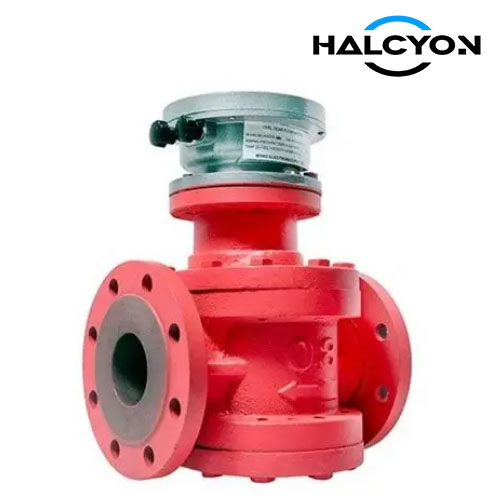
Cast Iron Marine Flow Meter
Cast Iron Marine Flow Meter is a durable flow measurement device designed for marine piping systems where strong mechanical performance and cost-effective operation are required.
The flow meter adopts a cast iron housing structure, providing excellent strength, wear resistance, and long-term stability in shipboard environments.
It is commonly used for measuring the flow of:
Marine diesel oil
Fuel oil
Lubricating oil
Cooling water
Fresh water
Other liquid media
Cast Iron Marine Flow Meter is widely applied in:
Ship fuel systems
Engine auxiliary systems
Oil transfer pipelines
Cooling water systems
Marine equipment systems
Overview
Working Principle of Cast Iron Marine Flow Meter
Cast Iron Marine Flow Meter measures fluid flow by detecting the movement or displacement of liquid passing through the measuring chamber.
Depending on the internal structure, different measuring technologies can be applied:
| Type | Working Principle |
|---|---|
| Oval Gear Type | Measures liquid volume through gear rotation |
| Positive Displacement Type | Calculates flow through fixed volume displacement |
| Mechanical Type | Uses mechanical movement for flow indication |
| Digital Type | Converts sensor signals into electronic data |
Applicable Standards of Cast Iron Marine Flow Meter
| Standard Category | Applicable Standards |
|---|---|
| Marine Equipment Requirements | IMO Requirements |
| Shipbuilding Standards | GB/T, CB/T Standards |
| Classification Requirements | CCS / ABS / DNV / LR / ClassNK |
Technical Specifications of Cast Iron Marine Flow Meter
| Item | Specification |
|---|---|
| Product Name | Cast Iron Marine Flow Meter |
| Body Material | Cast Iron |
| Measuring Medium | Fuel Oil, Diesel Oil, Water, Lubricating Oil |
| Measuring Type | Mechanical / Oval Gear / Digital |
| Accuracy | ±0.5% ~ ±1% |
| Connection Type | Flanged / Threaded |
| Display Type | Mechanical / Digital |
| Size Range | According to Application |
| Installation | Marine Pipeline System |
| Application | Ship Liquid Measurement |
Applications of Cast Iron Marine Flow Meter
This flow meter is widely applicable across multiple onboard systems. In the fuel oil system, it accurately measures fuel consumption to support efficient voyage planning. For the diesel engine system, it monitors fuel supply in real time to ensure stable engine operation. In the lubrication system, it measures oil circulation to maintain proper lubrication of moving parts. The cooling water system benefits from water flow monitoring to prevent overheating. Additionally, the oil transfer system relies on it for measuring transferred liquids during bunkering or internal transfers, while auxiliary systems use it for general flow monitoring to enhance overall operational awareness.