Brass Rose Box
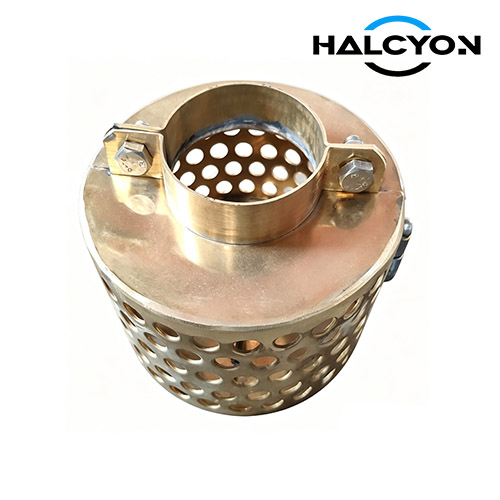
The brass rose box is essentially a coarse-level filtration device for the suction end of ship piping. Its industry standard name is suction filter box. It is mainly made of H62 brass, which is resistant to seawater corrosion and anti-biological adhesion. Its core function is to intercept solid impurities such as sediment, rust debris, etc. in the bilge water, ballast water or seawater, in order to protect expensive pumps, valves and heat exchangers.
Overview
Material Selection: Why Brass?
Brass (e.g., H62 alloy) is the preferred material for marine strainers because:
Excellent corrosion resistance in seawater environments
Good machinability for precision manufacturing
Strength and durability under high-pressure conditions
Anti-biofouling properties – brass surfaces naturally resist marine growth
Alternative materials include:
Stainless Steel – for higher strength requirements
Carbon Steel (hot-dip galvanized) – for cost-effective applications in less corrosive environments
Installation, Operation, and Maintenance Guidelines
Correct Installation Points
Location: Must be installed vertically at the lowest end of the suction line, ensuring the filter screen is completely submerged below the lowest liquid level.
Direction: Note the flow direction arrows on the housing; ensure fluid enters from the filter side and exits from the outlet side (usually side in, top out).
Space: Allow sufficient space for disassembly to facilitate easy removal of the filter screen for cleaning.
Daily Operation and Inspection
Initial Operation: After system startup, check for leaks at the flange connections and listen for normal pump operation.
Regular Inspection: It is recommended to inspect the filter housing for obvious corrosion or damage every voyage week or before and after each loading/unloading.
Cleaning and Maintenance Procedures
Safety Preparation: Close the valves on the suction line and release the pressure inside the housing.
Disassembly: Open the top or side cover and carefully remove the rose-shaped filter screen.
Cleaning: Rinse the filter screen surface with a high-pressure water gun in reverse, or remove stubborn deposits with a wire brush (be careful to protect the mesh structure).
Inspection: After cleaning, inspect the filter screen for damage or cracks under strong light, and check for excessive corrosion on the inner wall of the housing.
Reassembly: Replace the sealing gasket, tighten the bolts to the specified torque, open the valve, and check the seal.
Common Faults and Solutions
Fault Phenomenon: Abnormally low or fluctuating pump suction pressure.
Possible Cause: Severely clogged filter screen.
Solution: Immediately stop the machine and clean the filter screen.