Brass Marine Needle Valve
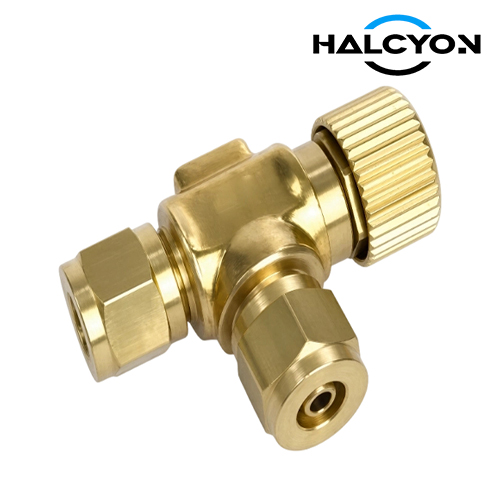
A Brass Marine Needle Valve is a precision flow control device machined from high-quality marine-grade brass. It employs a slender, tapered needle plunger that moves linearly into a matching seat, allowing the operator to make extremely fine adjustments to the flow rate or pressure in small-bore piping systems. A finely threaded stem provides smooth, backlash-free operation, enabling both accurate throttling and positive shutoff. Available in straight, angle, and manifold configurations, the brass needle valve is a time-tested, cost-effective solution for fuel oil, lubricating oil, compressed air, freshwater, and instrumentation lines on board vessels. Its natural corrosion resistance, non-sparking safety, and excellent machinability make it a preferred choice for general marine services.
Overview
1. Applicable Standards and Connection Options
Our Brass Marine Needle Valves are designed, manufactured, and tested in accordance with recognized marine and industrial standards:
Testing Standards: Valve pressure and seat tightness testing is performed per EN 12266-1 or API 598, ensuring body integrity and reliable shutoff.
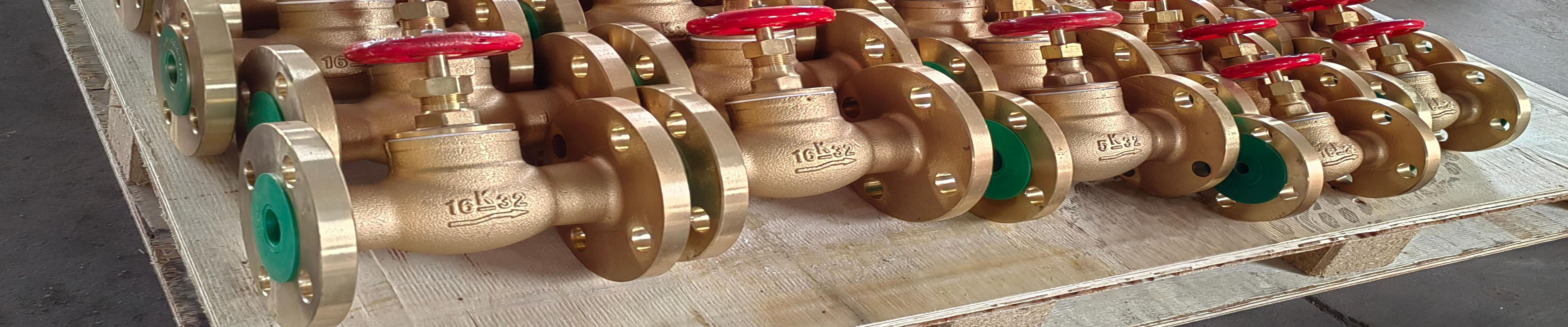
Connection Standards: Valves can be supplied with threaded ends (BSPP, BSPT, NPT, metric) or compression tube fittings (DIN 2353, ISO 8434) to match your existing instrumentation and piping. Flanged connections per JIS B2220 (5K/10K), ASME B16.5 (Class 150), or EN 1092-1 (PN10/PN16) are also available on request.
SOLAS / Classification Society Rules: For fuel oil and flammable fluid services, the brass body is inherently non-sparking and, when equipped with appropriate packing, complies with the fire safety and isolation requirements of SOLAS Chapter II-2 and the rules of major IACS classification societies.
2. Premium Brass Material Grades
Every component is manufactured from marine-grade brass alloys, selected for corrosion resistance and service compatibility:
Body & Bonnet: Machined from solid bar in dezincification-resistant (DZR) brass (e.g., CuZn36Pb2As, CW602N) or naval brass (CuZn39Sn1, CW719R). These alloys contain tin or arsenic additions that prevent selective zinc leaching in seawater and brackish water, ensuring long-term structural integrity. The natural golden finish requires no painting.
Needle & Seat: Precision-machined from corrosion-resistant brass or, for higher hardness and wear resistance, stainless steel (AISI 316). The needle and seat are lapped together to provide a smooth throttling characteristic and positive metal-to-metal shutoff.
Soft-Seat Option: For bubble-tight, zero-leakage closure on clean gases and liquids, a PTFE or reinforced EPDM soft seat insert is available, sealing against the brass needle.
Stem & Packing: Brass or stainless steel stem with a fine-pitch acme or metric thread for vibration-resistant adjustment. PTFE gland packing is standard, providing a low-friction, leak-tight stem seal. An adjustable gland nut maintains seal integrity over extended service life.
3. Key Technical Features and Operational Benefits
Precision Flow Control: The long-taper needle and fine-threaded stem allow minute, repeatable flow adjustments—critical for burner fuel regulation, gauge snubbing, and instrument isolation.
Positive Shutoff: The lapped metal-to-metal seat provides a tight, reliable closure. For absolute zero leakage on critical instrument lines, a soft-seat option achieves EN 12266-1 Rate A leakage performance.
Vibration-Proof Setting: A friction lock, locking nut, or self-locking handle design prevents the flow setting from drifting under the constant vibration of the engine room.
Inherent Corrosion Resistance: DZR brass does not rust, eliminates the need for external coatings, and resists the corrosive effects of salty air, bilge water mist, and acidic fuel oil condensate.
Non-Sparking Safety: Brass is intrinsically non-sparking on impact, making these needle valves safe for installation on tanker decks, in pump rooms, and in hazardous zones where flammable vapors may be present.
Cost-Effective Longevity: The combination of moderate initial cost, zero coating maintenance, and proven decades-long service life makes brass the most economical choice for general marine needle valve applications.
4. Typical Marine Applications
Brass Marine Needle Valves are installed in a wide range of shipboard systems where reliable, precision flow control is required:
Fuel Oil Systems: Flow regulation to main and auxiliary engine burners, pilot lines, and fuel recirculation loops.
Lubricating Oil and Hydraulic Systems: Precise pressure regulation, gauge isolation, and sampling points on main engine, gearbox, and deck machinery circuits.
Compressed Air and Instrument Air: Regulation of pneumatic supply pressure to control panels, actuators, and air tools; gauge and transmitter isolation.
Fresh Water and Potable Water: Flow control in domestic water systems, water treatment plants, and sampling lines.
Gauge and Transmitter Damping: Snubbing and isolating pressure gauges, level transmitters, and flow meters to prevent pulsation damage.