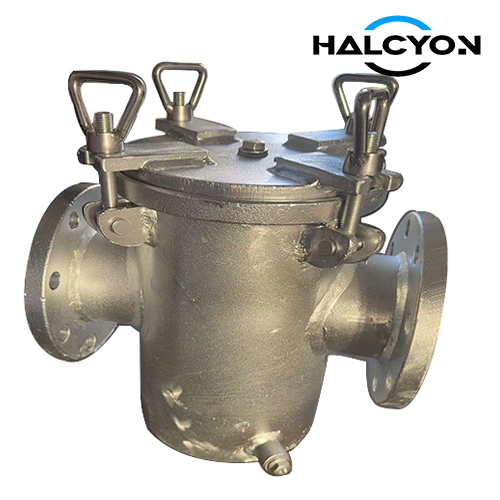
Basket Type Strainer for Marine
Size: DN25-DN500
Type: Basket Type
Material: Body: Cast iron/Carbon steel Welding, Mesh: SS304/SS316
Media: Sea water, Fresh water, Oil
Standard: JIS F7121,CB/T497-94
Overview
Differences Between Cast Iron Strainers and Welded Steel Plate Strainers:
1.Cast Iron Strainers: The valve body is made of gray cast iron or ductile iron. They are cost-effective, have good castability, high strength, and excellent pressure resistance. However, they are prone to rust and are suitable for environments with low corrosion levels.
2.Steel Plate Filters (Carbon Steel): Made of carbon steel or stainless steel, they offer higher strength than cast iron and are suitable for high-pressure applications. However, they are heavier, and their surfaces must undergo rigorous anti-corrosion treatment, such as hot-dip galvanizing, or they are prone to corrosion.
Item | Cast iron strainer | Welded Steel Plate strainer |
Body material | Grey cast iron, ductile cast iron | Carbon steel, Stainless steel |
Strength | Normal | Higher, suitable for high pressure |
Corrosion Resistance | Easy to rust | Highly corrosion-resistant |
Cost | Lower | Higher |
Application | water, steam, oil, and other fluids | High-Pressure/Corrosive Conditions |
Selection Recommendations:
Cast iron filters are suitable for standard applications with limited budgets, where the medium is water, steam, or oil; the medium is not highly corrosive; and the pressure ranges from PN6 to PN16. They offer excellent value for money.
Steel plate filters: For highly corrosive media, higher pressures, or demanding operating conditions such as those in the chemical and petrochemical industries, carbon steel or stainless steel filters—combined with effective anti-corrosion coatings—provide greater reliability.